Grey iron is a cast iron in which the graphite is in the form of thin plates (flakes), and it is one of the most widely used material groups in foundries. This article explains the engineering advantages and limitations of grey iron and the points to watch when selecting a grade. For examples of use by part, see the article "Applications of Grey Iron".
What is grey iron?
In Turkey, "pik döküm" is the established name for flake graphite (grey) cast iron. It is designated EN-GJL within the scope of the European standard EN 1561, and the older DIN designation is known as GG. The carbon separates out as plate-shaped graphite; the fracture surface looks grey because of this graphite.
The microstructure of grey iron is determined not only by the graphite shape but also by the matrix: a mainly pearlitic matrix increases strength and wear resistance, while ferritic areas lower hardness and make machining easier. The length and distribution of the graphite flakes also determine the balance between tensile strength and damping capacity.
The graphite flakes give the material both its strengths and its limitations. Most of the advantages in the next section arise directly from this structure.
Main advantages of grey iron
The advantages of grey iron carry different weight depending on the application; in most cases one or two are decisive, and the material grade is selected according to that priority. The main advantages are the following:
- Vibration damping: flake graphite damps vibration energy; this property stands out in structures sensitive to vibration.
- Compressive strength: its behaviour under compressive loading is clearly better than under tensile loading.
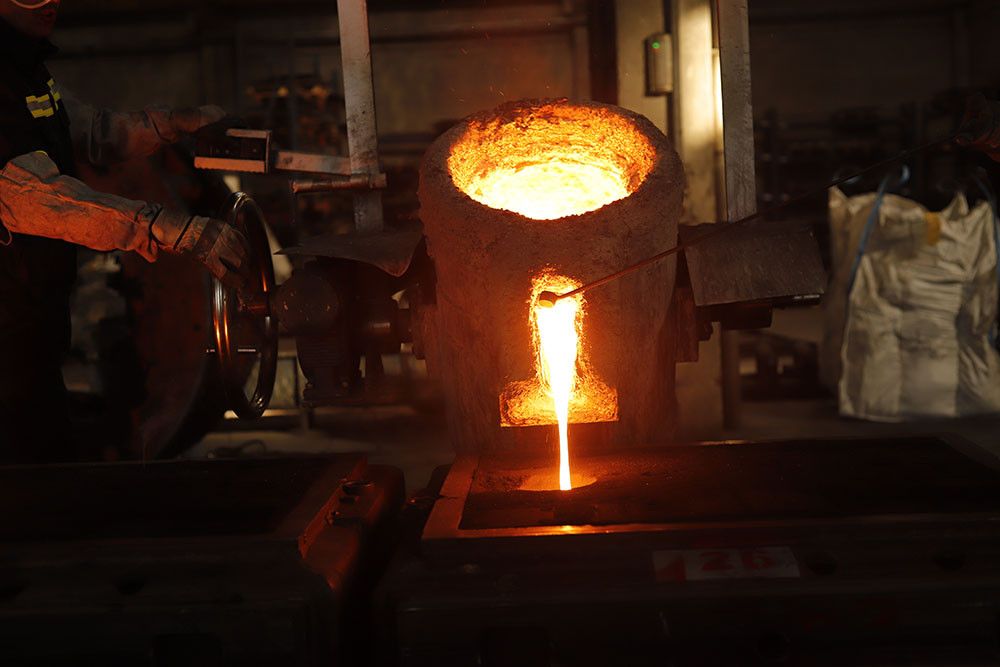
- Castability: the liquid metal fills the mould well and the tendency to shrink is low; geometries with complex sections and thin walls can be cast at reasonable cost.
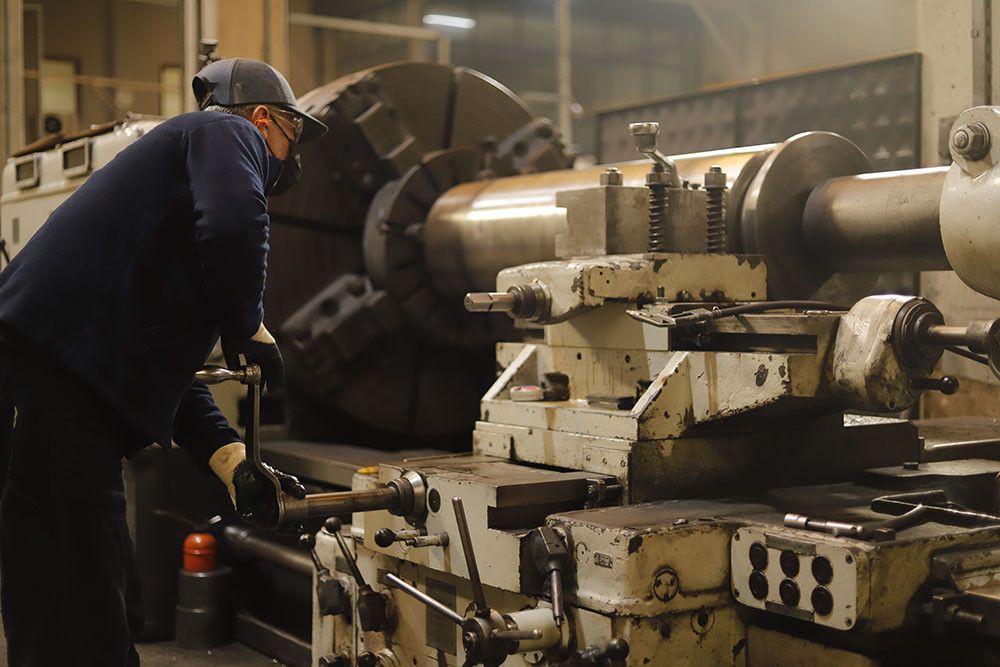
- Machinability: the graphite flakes break the chip; cutting tool life and surface quality are generally favourable.
- Thermal conductivity: compared with ductile iron, it conducts heat better and is more tolerant of thermal cycling.
- Wear and sliding behaviour: graphite acts as a lubricant on sliding surfaces.
- Cost: raw material and machining costs generally remain lower than those of alternative materials.
Limitations and points to watch
Grey iron is not a ductile material; its elongation at fracture is very low and it is weaker than ductile iron against impact loading. Its tensile strength is also below that of ductile iron and steel casting. For this reason, another material may be needed for parts carrying impact, bending or fatigue loads.
In grey iron, strength is sensitive to wall thickness: because thick sections cool more slowly, the microstructure coarsens and the strength of the same grade falls. For this reason the strength in the part may differ from that of a separately cast test bar, and section transitions must be taken into account at the design stage.
Low ductility directly affects the geometry of load-bearing areas in the design. Sharp internal corners create stress concentrations and increase the risk of cracking; giving radii to corners and avoiding abrupt section changes are therefore particularly important.
Hardness and machinability are also linked: a high-grade pearlitic structure is more resistant to wear but can shorten tool life. For parts to be machined, the grade should therefore be selected together with the machining plan.
How is the material grade selected?
In EN 1561, the number in the grade name indicates the minimum tensile strength in MPa measured on a separately cast test bar: for example, EN-GJL-250 means a minimum tensile strength of 250 MPa. In the older designation, GG25 corresponds to this grade. The standard includes grades between 100 and 350.
The grade is selected by taking into account the load type, wall thickness, vibration and heat requirements, machining allowance and cost. A higher grade generally means tighter composition and process control. If the requirement goes beyond tensile strength (ductility, impact), ductile iron should also be included in the comparison.
On the quality assurance side, the tensile test, hardness measurement and microstructure examination are used to verify the grade. If the type of test sample (separately cast or taken from the part) and the acceptance criteria are written in the order specification from the start, no uncertainty remains between the actual value in the part and the minimum value in the standard.
To see the grade values as a table, see the Grey iron grades and mechanical values page.
Conclusion: when is grey iron suitable?
Grey iron is a cost-effective solution where vibration damping, compressive strength, castability and machinability are required. If its limitations (low ductility, section sensitivity) are known from the start, it can be used without problems. You can find out which parts it is preferred for in the article "Applications of Grey Iron".
At SYC, the stages from pattern and mould work to casting and machining are within the same company. You can request a quote with a drawing or a short description, and clarify the material grade with our team together with information on load type, operating temperature and environment.