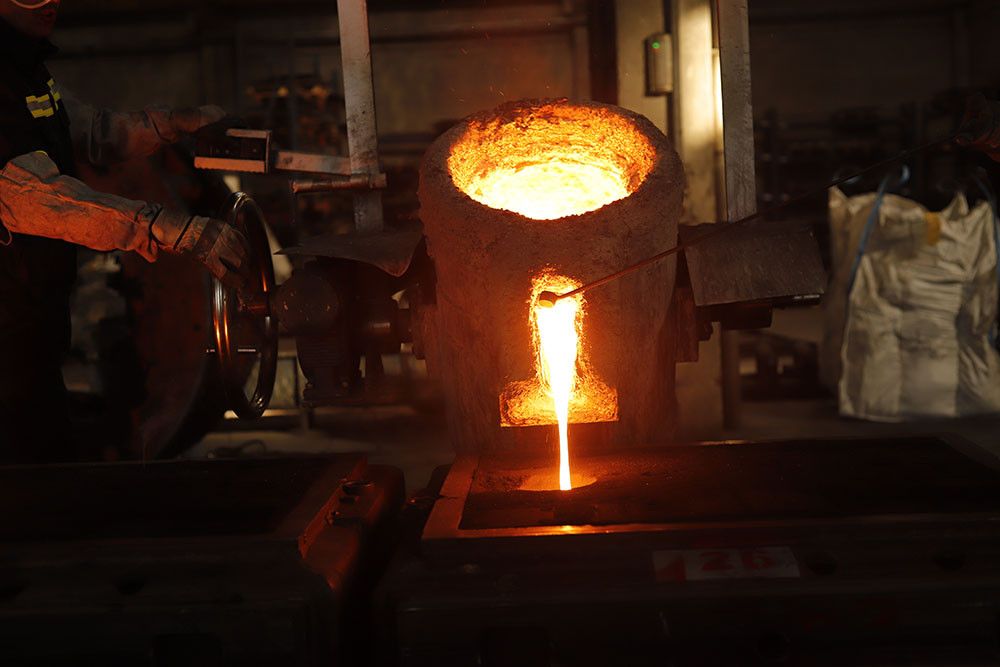
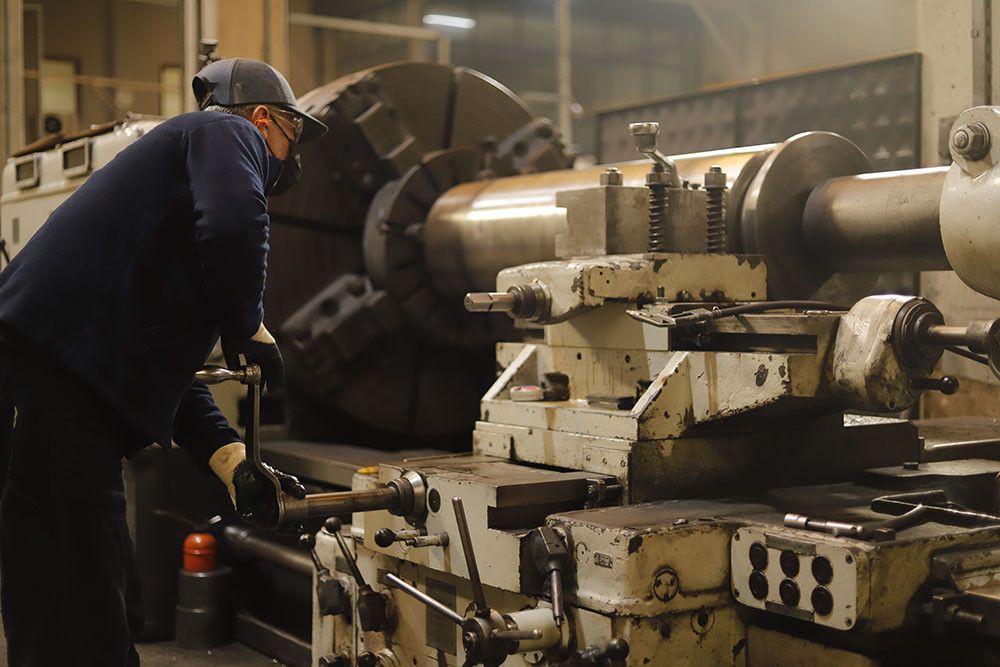
For grey iron, the question of which parts to use it in is answered starting from its properties: it is preferred where vibration damping, compressive strength, thermal conductivity and machinability are expected. This article groups the common applications of grey iron by part and industry. For the details of its advantages and limitations, see the article "Advantages and limitations of grey iron".
Properties that determine the application
When deciding whether a part should be made of grey iron, the first question is what load the part carries. A role dominated by compression and damping favours grey iron; a role dominated by tension and impact may require a different material.
The applications of grey iron (flake graphite, EN-GJL) are not random; behind each there is a material property. When impact, bending or fatigue loading is decisive, more ductile materials such as ductile iron come into consideration; grey iron stands out when the following properties are sought:
- Vibration damping: machine tool beds, bearings, machine bases.
- Compressive strength: housings, pedestals and counterweight parts.
- Thermal conductivity and resistance to thermal cycling: brake discs, brake drums, heating equipment.
- Sliding and wear behaviour: cylinder liners, slideways, piston ring seats.
- Castability and cost: complex housings, series parts.
Machine building and machine tools
Machine tool beds, table and slideway beds, base plates and gearbox housings are classic applications of grey iron. Because damping of the vibration generated during cutting affects the surface quality of the workpiece and tool life, the damping capacity of the material is decisive in these parts.
Compressor housings, hydraulic and pneumatic component housings and general machine parts can also be made of grey iron with the same logic. For parts with machined surfaces, carrying out the transition from casting to machining with a single supplier makes dimensional integrity easier.
In machine tool beds, the internal rib layout and wall thickness determine the balance between rigidity and weight. In areas under dynamic loading, the low ductility of grey iron must be taken into account and, if necessary, a different material grade should be considered for those areas.
In gearbox and reduction gear housings, the risk of oil leakage depends on the flatness of the machined flange surfaces as much as on the leak tightness of the casting surface; the machining plan after casting is therefore made from the start.
Automotive and vehicle parts
Engine blocks, cylinder heads, flywheels, brake discs and drums have long been common applications of grey iron. In brake parts, thermal conductivity and resistance to thermal cycling stand out; in engine blocks, castability and wear behaviour do.
Which grade is used in which part depends on the relevant customer specification and design; the same part may be solved with different grades by different manufacturers. For this reason, the part drawing and requirements should be taken as the basis rather than general information.
In parts such as brake discs, thermal cycling also affects the tendency of the material to crack; the choice of grade and composition is therefore tied to the design specification. In engine blocks, the trend towards thinner walls increases the importance of casting simulation and process control for grey iron, which is sensitive to section thickness.
Fluid, heating and infrastructure applications
Pump housings, low-pressure valve bodies and pipe fittings can be produced in grey iron. On the heating side, boiler sections and stove and grate parts are common because of their heat resistance and low cost. In infrastructure, structural and decorative parts such as railings, columns and gratings have historically been produced in grey iron.
For pressurised and impact-exposed infrastructure parts, ductile iron is also frequently used today; the choice is made according to the relevant product standard. In these areas, not only the name of the material but the minimum values in the product standard must be taken into account.
In parts that carry fluids, such as pumps and valves, leak tightness depends on porosity control. For such parts, checks such as a pressure test and leak tightness inspection may be included in the specification.
In heating equipment, thermal expansion and thermal cycling stresses determine the part geometry and wall thickness distribution; in these parts the structure is kept simple and the wall thickness uniform.
Conclusion: is grey iron suitable for your part?
Grey iron is used in parts where vibration damping, compressive strength, thermal conductivity and low unit cost are required together. Correct use comes when the limits of the material are known.
We can assess whether your part is suitable for grey iron together with the drawing and the service conditions. At SYC, the casting and machining stages are provided within the same company; it is enough to add a drawing attachment or a part description to the quote form.